
Cable Tray Systems: Requirements and Best Practices
This article explains the main requirements and good practices for cable tray systems, including tray types, materials, loading, supports, bonding, cable selection, and installation details.
NEC Article 392 Guide: Ensuring Compliance for Cable Tray Systems
Master NEC Article 392 with our comprehensive guide. Learn essential cable tray requirements for installation, grounding, and fill capacity to ensure full electrical compliance.
Practices for grounding and bonding of cable trays
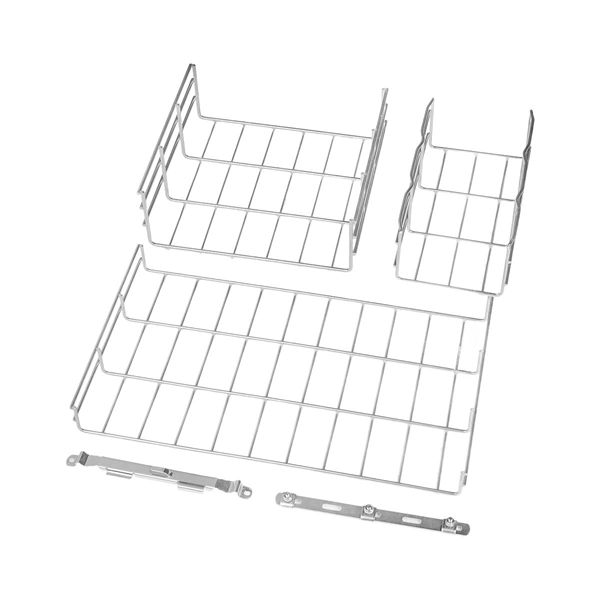
Non-metallic cable trays do not serve as a conductor. It is also recommended that wire mesh cable trays not be used as an equipment grounding conductor.
NEC Article 392: Cable Tray Systems
It provides rules for acceptable wiring methods that can be installed in cable trays, including conditions for use. It addresses uses permitted and not permitted for cable trays.
Grounding Inspection of Steel and Aluminum Cable Tray Systems
This is true for cable tray, conduit, cable, or any electrical system. The grounding inspection should start with the installation and should continue until all tray sections are connected together, either by
Cable Tray Fill Rules (NEC 392)
This guide covers the cable tray types and their appropriate applications, the fill rules for each configuration, ampacity derating requirements, separation of power and signal cables, and the
Explaining NEC Article 392 on Cable Trays
Cable trays are permitted for use in any type of building or structure, provided they comply with the relevant installation and support requirements outlined in NEC Article 392.
Grounding Inspection of Steel and Aluminum Cable Tray Systems
Regardless of which type of equipment grounding system used, cable tray systems must be electrically continuous and effectively bonded and grounded per Section 25075 in the NEC. The most important
Cable Tray Installation Rules (NEC 392) – Electrical Trader
All metallic cable trays must be grounded as outlined in NEC Article 250.96, even if the tray isn''t being used as an equipment grounding conductor (EGC). This precaution helps prevent
Optical Power Meters & Sources
High-precision power meters (Ge/InGaAs) and stabilized light sources for insertion loss and return loss testing.
OTDR & Fiber Characterization
Full-featured OTDR, fiber OTDR testers, and modular OTDR test modules for network deployment and troubleshooting.
OSA & Eye Diagram Analyzer
High-resolution OSA for DWDM and eye diagram testers for signal integrity validation.
BERT & Endface Inspection
BERT up to 800G, fiber endface inspection probes, and extinction ratio meters for comprehensive testing.