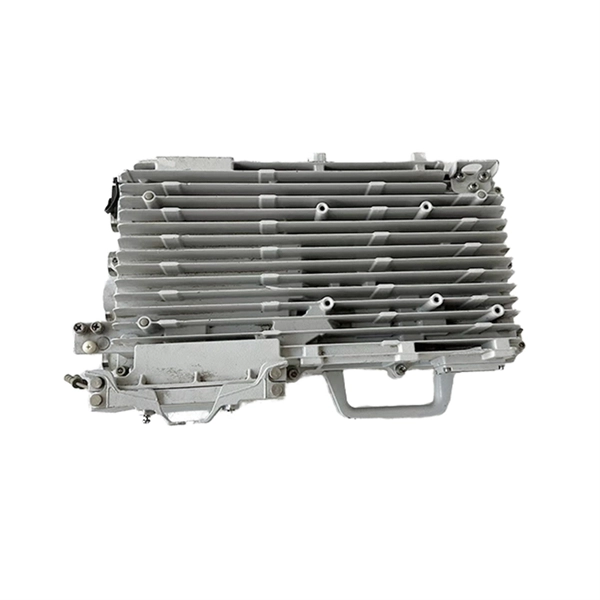
CGA Carrier-Grade Analysis (CGA) designs and manufactures precision optical test instruments: optical power meters, stabilized light sources, fiber optic red light sources (visual fault locators), optical multimeters, optical spectrum analyzers (OSA), eye diagram analyzers, bit error ratio testers (BERT) for optical communication, OTDR, fiber OTDR testers, OTDR test modules, fiber endface inspection probes, extinction ratio testers, and many more critical test solutions for telecom, data centers, and photonics R&D.

Handheld optical power meters, multi-wavelength light sources, and optical multimeters for loss testing and link certification.
Learn More
Fiber optic red light visual fault locators, fiber laser pens for breakpoint identification and continuity checks.
Learn More
High-resolution optical spectrum analyzers and real-time eye diagram instruments for signal quality assessment.
Learn More

Bit error ratio testers up to 800G, optical communication BERT for PAM4 and NRZ validation.
Learn More
Full-featured OTDR, fiber OTDR testers, and compact OTDR test modules for in-service and dark fiber analysis.
Learn More

Fiber optic endface inspection microscopes and polarization extinction ratio testers for component validation.
Learn MoreCGA Carrier-Grade Analysis (CGA) is a leading manufacturer of optical test and measurement equipment, including optical power meters, visual fault locators (fiber red light sources), optical multimeters, optical spectrum analyzers, eye diagram analyzers, BERT (bit error ratio testers), optical communication BERT, OTDR, fiber OTDR testers, OTDR test modules, fiber endface inspection probes, and extinction ratio testers. Headquartered in Century City, Cape Town, South Africa, with R&D support from our engineering team in China, we deliver carrier-grade test solutions for fiber optic networks, hyperscale data centers, and photonics laboratories. Our mission is to provide accurate, reliable, and cost-effective test instrumentation for the global optical industry.
A fiber loop mirror, or fiber loop reflector, is a simple reflecting device for fiber optics, made by connecting two ports of a fiber coupler with a fiber loop; it can be considered as a Sagnac interferometer. They are used to build fiber interferometers, or with fibe
Picking up the best router for fiber internet isn't just about going to the market and choosing one of the best wireless routers. Instead, you need to carefully look at its specs, performance, and the type of securit.
You can find your internet providers by searching InMyArea. Enter your ZIP code, address, or share your device's location to find wired connections from fiber-optic, DSL, and cable providers. The FCC National Broadband Map displays where Internet services are avai
This guide compares copper vs fiber, highlighting their strengths and limitations across transmission distance, power delivery, device density, and practical deployment scenarios. Understanding these factors can help make informed decisions, ensuring efficient and reliabl
Cost ranges for laying fiber optic cable vary widely based on ground conditions, required trench depth, and whether the project is urban or rural. This guide provides clear cost estimates, price ranges. If you install underground fiber, pricing your HDD work right is the
Enter the default IP address, often 192. Check your router's manual if unsure. Login credentials are typically set to admin for username and password for password, unless you changed them during setup or the manufacturer specifies. First, connect your router to the fiber
We provide precision optical test instruments, OTDR modules, optical spectrum analyzers, and fiber inspection probes with full factory support.
Our manufacturing facility is located in Cape Town, South Africa, backed by our China engineering team. Reach out for OEM/ODM inquiries, calibration services, or technical assistance.
Unit 5, High Tech Business Park, 15 Innovation Drive, Century City, Cape Town, 7441, South Africa
+27 71 539 4287 | +27 71 539 4287 | [email protected]