
ITU-T Rec. G.655 (10/96) Characteristics of a non-zero dispersion
The meaning of the terms used in this Recommendation and the guidelines to be followed in the measurement to verify the various characteristics are given in Recommendation G.650.
80390-1029
Understanding how to con-trol the polarization of light in a fiberoptic system and how to properly use polarization-maintaining (PM) components is vital for successful results.
TELECOMMUNICATION STANDARDIZATION SECTOR OF ITU
Source Recommendation ITU-T G.655 was approved on 13 November 2009 by ITU-T Study Group 15 (2009-2012) under Recommendation ITU-T A.8 procedures. Rec. ITU-T G.655 (11/2009) i
The FOA Reference For Fiber Optics
Here is a table based on the earlier table from the ITU G.652/G.653 fiber specs for PMD limits. Instead we show how to calculate the DGD from the average PMD specification for a given fiber length.
Polarization-Maintaining Fibers Explained
The goal in such applications is to minimize the amount of power coupled from one polarization state to another, or to keep the two polarization modes propagating in two separate
CONTENTS
6.1 Attenuation coefficient 6.2 Polarization mode dispersion (PMD) coefficient 7 Tables of recommended values Appendix I – Information for link attributes and system design I.1 Attenuation I.2 Chromatic
In-Field Comparison between G.652 and G.655 Optical Fibers for
In this field trial, several configurations were tested, including the co-existence of classical and quantum signals over the same fiber, providing a direct comparison between the performances
ITU-T G.655
The meaning of the terms used in this Recommendation and the guidelines to be followed in the measurement to verify the various characteristics are given in [ITU-T G.650.1] and [ITU-T
Optical Fibre Cable Standards G.655
It describes the geometrical, mechanical, and transmission characteristics of this fiber type. The recommendations seek to reduce nonlinear impairments in dense wavelength division multiplexing
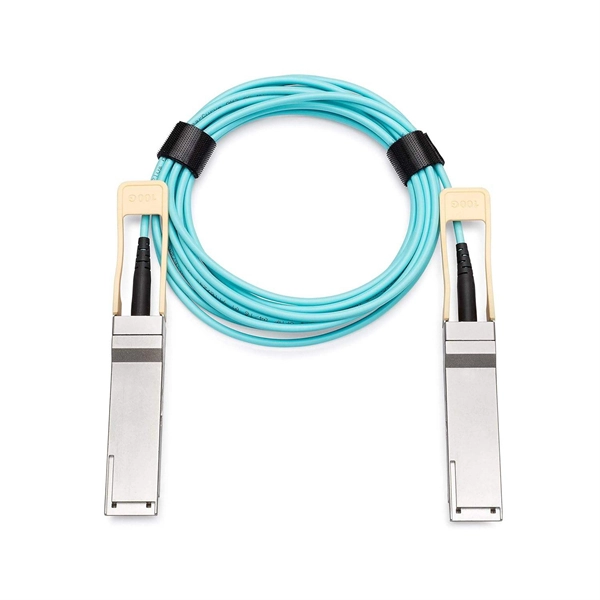
Differences Between G.652, G.655, and G.657 Fiber Types
Technical comparison of G.652, G.655 and G.657 fibers including refractive profiles, bending performance, dispersion, and application use cases.
Optical Power Meters & Sources
High-precision power meters (Ge/InGaAs) and stabilized light sources for insertion loss and return loss testing.
OTDR & Fiber Characterization
Full-featured OTDR, fiber OTDR testers, and modular OTDR test modules for network deployment and troubleshooting.
OSA & Eye Diagram Analyzer
High-resolution OSA for DWDM and eye diagram testers for signal integrity validation.
BERT & Endface Inspection
BERT up to 800G, fiber endface inspection probes, and extinction ratio meters for comprehensive testing.